
March 14, 2026: Saturday Remix
Teachers and Staff: Happy Saturday!
We had a wonderful Theme Recital last night! Thank you teachers for encouraging your students to participate and prepare, and a special thank you to Mr. Denny, Mr. Yue, and Miss Suzanne for performing with and guiding their students on stage.
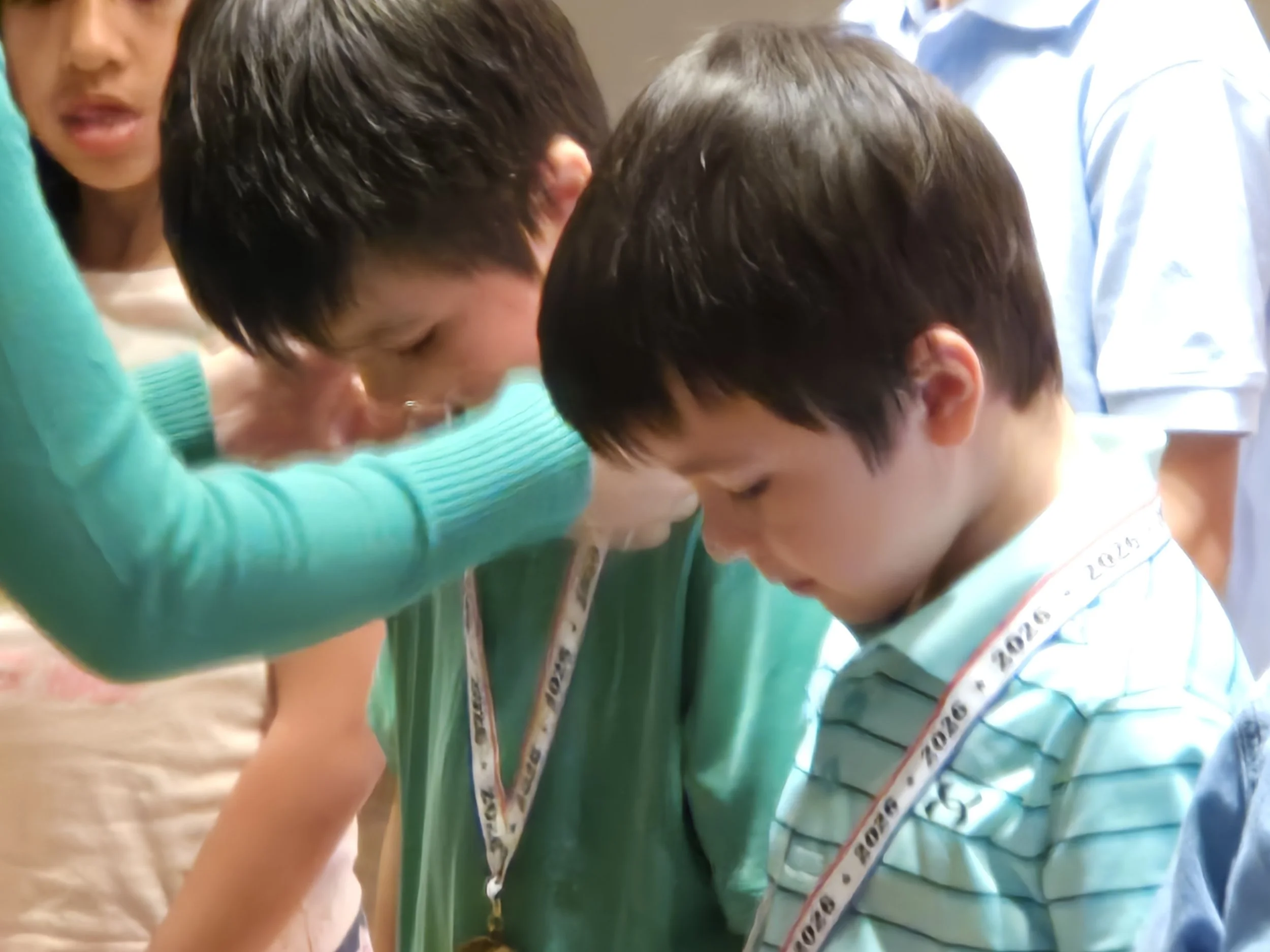
We gave students medals this time instead of certificates, and it felt very special.

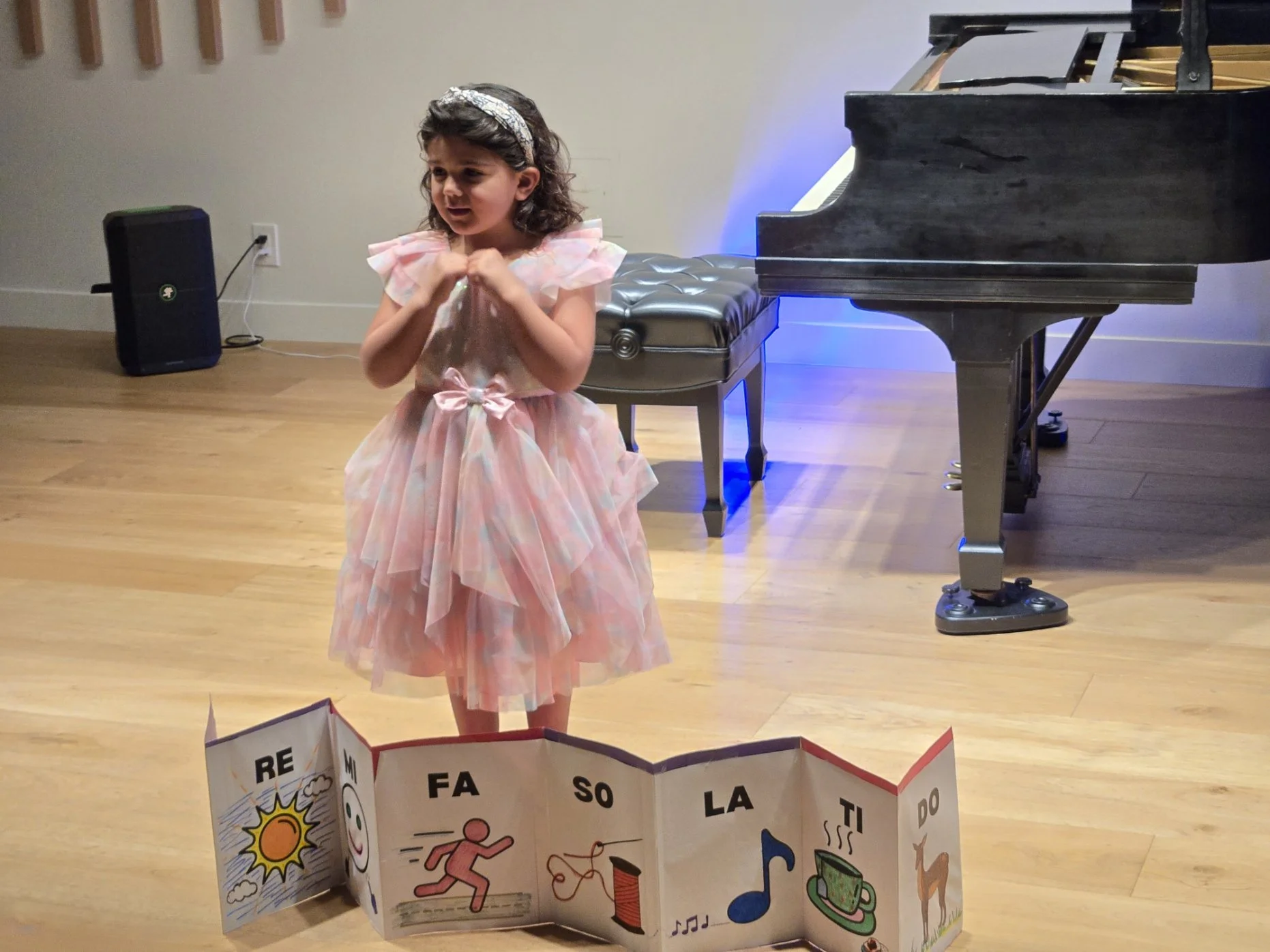


Review of Elements of Our Philosophy (Especially about Young Students), plus Policy Regarding Parents Sitting in on Music Lessons
We honor and respect parents’ roles in nurturing, protecting, guiding, and raising their children. At our music school, we strive to design and implement learning environments, curriculum, and teaching strategies that are healthy, safe, nurturing, and effective for children learning about and participating in making music. Our education philosophies are rooted in the research, writings, experiences, and expertise of our founder and director, Dr. Dennis Frayne, and all teachers at our school strive to learn and teach by these philosophies and principles.
While we all wish for students to make progress in their music learning, we place even greater importance on each student’s short-term and long-term health, safety, joy, and confidence in their music-making experiences, their development, and their growth at our school.
Strategies to help us achieve all of these objectives, especially with very young children, include lots of freeplay, with musical instruments at the center, and also with a wide variety of other learning aids including games, puzzles, books, puppets, crafts, and toys. We incorporate and encourage improvisation, movement, listening, watching, and analyzing music. We practice reading and writing, and read to students. In addition to helping students enjoy their lessons, these healthy and positive activities improve teacher-student relationships, trust, and bonding, facilitate fine and gross motor skills, develop their musical ear, reinforce student autonomy, build confidence in decision-making, promote a can-do attitude, boost comfort in freely expressing themselves, and instill a lifelong love of music and learning.
In our music lessons, we “follow the student.” As we encourage and gently guide students through curriculum, content, instruction, and development of skills, we listen to students' wants, needs, and desires, and pay attention to their interests and abilities. We give students choices and allow students to make many of their own decisions, even if this means deferring teacher or parent goals and ambitions in favor of student goals and ambitions. Some students enjoy following instructions and adhering to their teacher’s gameplan, and we cultivate their work ethic as these students succeed and thrive in a manner that suits their personalities and motivations. Other students prefer to set their own objectives, plan their own course, and deviate from standard sequencing, and we advocate for these students as they thrive and triumph in their own unique ways. In honoring students' wishes and pacing, we help them gain autonomy and confidence while they explore and expand their creative potential.
Note to parents: We know that some parents may feel uncomfortable paying tuition for what sometimes looks like play rather than progress. But we also know that this is the path to success in music lessons. Students who are free to explore, learn, create, and grow according to their needs, interests, abilities, and desires will one day be making music at advanced levels, and loving it. Students who are forced or cajoled into “making progress” according to someone else’s sequence and timeline will soon quit lessons, develop a general distaste for music and music learning, and in some cases inherit lifelong traumas, anxieties and nervousness, and/or other physical and emotional harms that are difficult to overcome even later in life.
Ultimately, we take the long view: our goal is to nurture people, young and old, who feel safe, secure, joyful, confident, and deeply connected to music, their whole life long. When students are given the freedom to explore, under the guidance of caring teachers, and the support of trusting parents, they develop a lasting relationship with music that can enrich their lives for many years to come. We thank you, parents, for your trust and partnership as we work together to create meaningful, healthy, and inspiring musical experiences for your children.
Our Policy on Sitting in on Music Lessons
Parents, primary guardians, or approved aides are allowed to sit in on private individual lessons, but not group lessons, classes, or ensembles. We have an open-door policy for private individual lessons, for one parent or primary guardian only, and the same parent or primary guardian each week (no more than one parent/guardian, and no other individuals, including siblings, friends, non-primary guardians, etc.). We also maintain windows on all private lesson room & and classroom walls and/or doors.
However, please note that parents sitting in on lessons can sometimes be disruptive to students. We encourage parents to allow space and freedom for music students to explore, express, and be creative, without the feeling of judgment, expectations, consequences, or someone “looking over their shoulder” — music lessons are most effective when students are not afraid to experiment or “make mistakes” or “look bad” while striving to be creative in front of other people. Parents agree not to make comments, provide feedback, or give instructions to teachers or students during lessons.
Other than the one primary parent, guardian, or approved aide, no family, friends, or visitors are permitted to sit in on or observe any student’s lessons.
We are grateful to parents for partnering with us in their child’s music education. Their support and encouragement make a real difference.
Teachers: Remember that you can always call us from within your music lesson if you need assistance or support right then and there. In addition, we are placing placards with the parent agreement (as underlined above) and studio policy in each lesson room that you can hand to parents if/when needed.
Upcoming Off-days
In March 2026, we have two scheduled off-days (school is closed; no lessons):
Tuesday, March 17, 2026 (St. Patrick’s Day)
Friday, March 20, 2026 (Nowruz / Persian New Year)
No regularly scheduled lessons on these two days only. (We then will have a longer off-week period in early April, from 4/1 - 4/9 2026.)
Q: How do we re-enable the dynamic articulation feature on the electric keyboards if it becomes disabled?
A: This is a feature that allows for dynamics when playing, essentially, light = quiet and heavy = loud. Sometimes this feature gets disabled (probably accidentally), and then all the keys play at only one dynamic level. To reset this feature:
1) Turn the keyboard off.
2) Hold down the high C on the piano, the highest key.
3) While continuing to hold down the highest C on the piano, turn on the keyboard. You will see the red light blink a few times indicating that it worked.
These instructions can also be found in the Technology subfolder in the Teacher Resources Google folder, and also in the Teacher Resources binder in the lesson rooms.
Please always remember to turn off (and teach your students to turn off) the keyboards after each lesson, and before leaving the lesson rooms.
—
Thank you, everyone, for all that you do!
Have a magical Saturday, a musical weekend, and a safe and healthy coming week.
Thank you,
Dennis Frayne
"Dr. Dennis"
Laguna Niguel School of Music
Dennis Frayne Music Studios
30110 Crown Valley Pkwy, Suites 105/107/108
Laguna Niguel, CA 92677
(949) 844-9051 (office cell)
Lake Forest School of Music
Baker Ranch, CA 92630
(949) 402-7210
www.dennisfraynemusicstudios.com
www.lagunaniguelschoolofmusic.com
www.lakeforestschoolofmusic.com
Confidence, Creativity, Can-do Attitude
Piano Lessons | Voice Lessons | Music Lessons | Teacher Training
Music is... Creative, Thoughtful, Fun, & Rewarding!